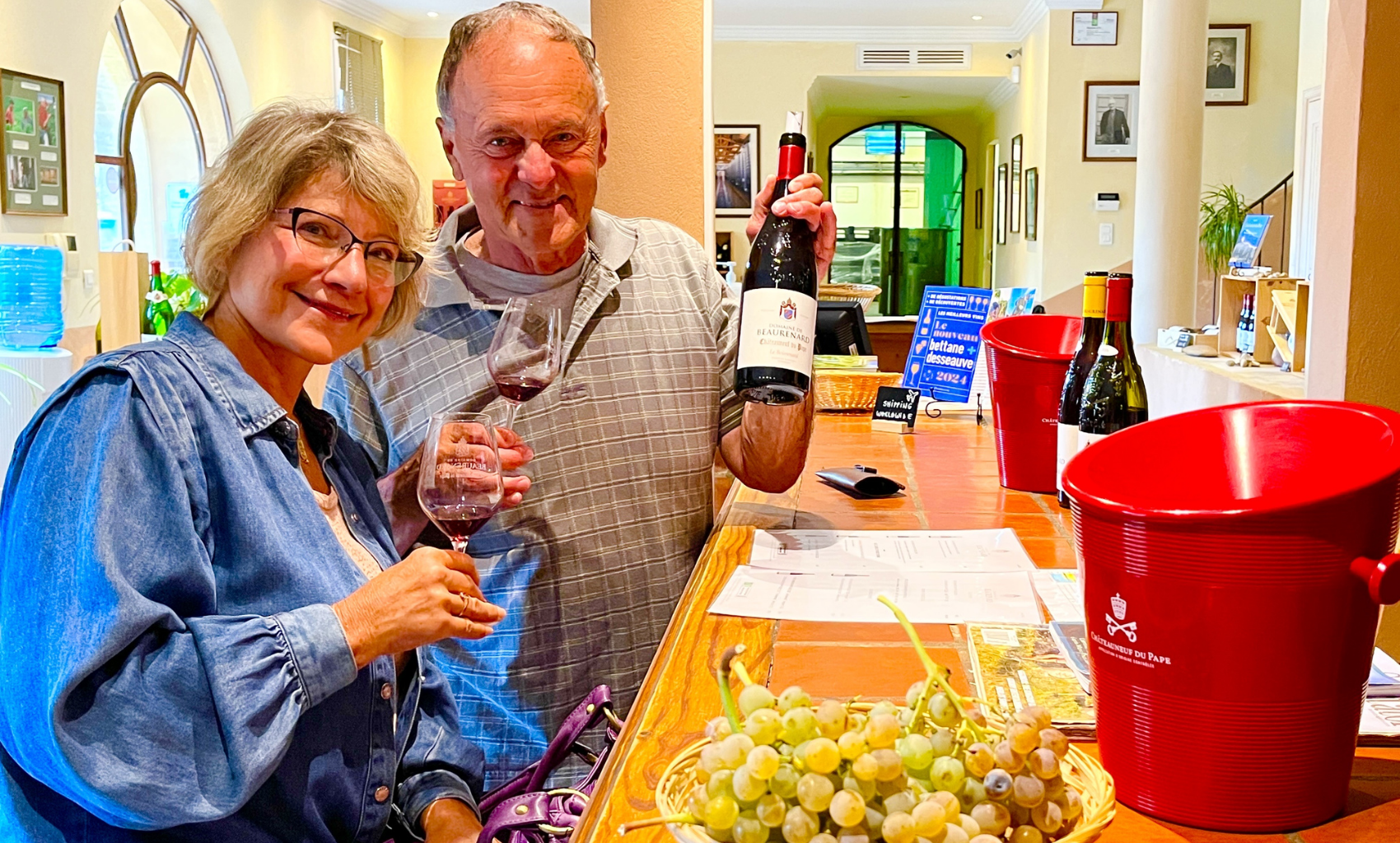
Two tasting trips leave Avignon for the Châteauneuf-du-Pape vineyards, both run by the same
operator, both priced at $92. One pours at least nine wines across three cellars in three
different appellations. The other pours at least six, every one of them Châteauneuf-du-Pape, at a
single old estate.
Same money, opposite answers. Which one is right depends entirely on whether you came for breadth
or for depth, and almost nothing written about Châteauneuf tastings tells you that the choice
exists.
What a tasting here actually pours
Châteauneuf-du-Pape is a red-wine appellation before it is anything else — reds are about 93% of
what the 290-odd estates make, whites the remaining 7%, and no rosé is permitted at all. So a
tasting is mostly a study in one grape’s many moods. Grenache carries the structure; Syrah and
Mourvèdre fill in colour, pepper and grip. The wines run warm, often 14–15% alcohol, which is why
serious tasting rooms keep a spittoon on the bench and why using it is a courtesy rather than an
insult.
The three-cellar trip widens that out deliberately. It starts in Beaumes-de-Venise, works
through a second Southern Rhône estate, and finishes inside Châteauneuf-du-Pape — so you taste the
appellation against its neighbours rather than in isolation. That comparison is the real education.
A Châteauneuf tastes powerful on its own and specific when a Beaumes-de-Venise has just gone
through the same glass.
The thirteen grapes, and why you will also read eighteen
You will see both numbers, often on the same afternoon, sometimes from the same guide. Both are
correct and they describe one list.
The appellation names thirteen grape varieties: grenache, syrah, mourvèdre, cinsault, clairette,
vaccarèse, bourboulenc, roussanne, counoise, muscardin, picpoul, picardan and terret noir. Three of
those exist in more than one colour — grenache comes as noir, gris and blanc; clairette as blanche
and rose; picpoul as blanc, gris and noir. Count each colour as its own vine and the thirteen
becomes eighteen. Nothing was added in some later revision; it is one list counted two ways, and the
appellation’s own producers’ federation still brands the place as la symphonie des 13 cépages.
Worth knowing before someone corrects you at a tasting bench, in either direction.
Why the bottles cost what they do
This is the question people ask once the third pour has gone down well and they are eyeing the
price list.
The appellation caps yield at 35 hectolitres per hectare — one of the lowest ceilings in France,
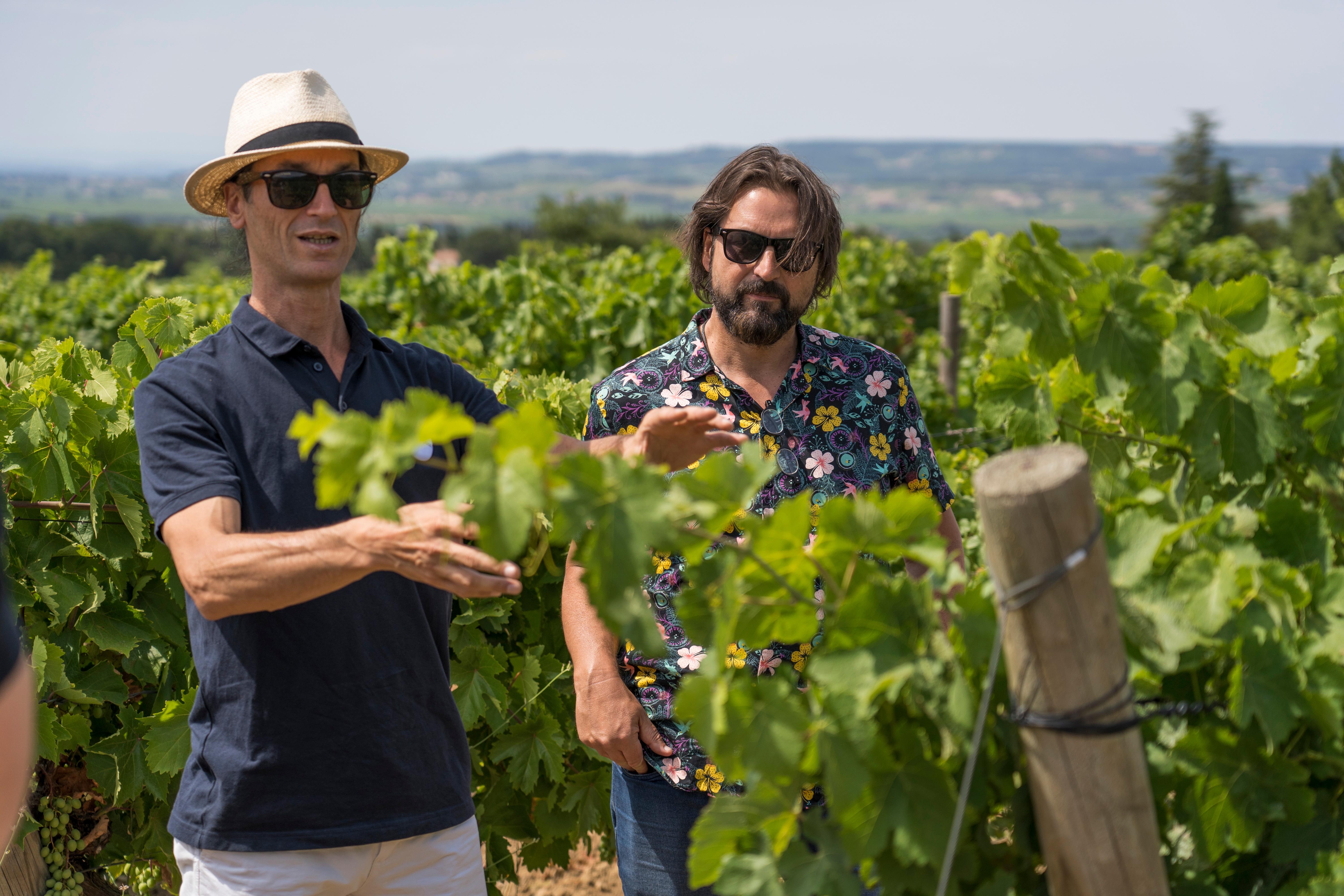
and growers routinely come in under it. Estates green-harvest by hand in summer, cutting off healthy
bunches so the survivors ripen properly. Four of the varieties, grenache noir and mourvèdre among
them, must be trained as free-standing bushes rather than on wires. And all of this happens on
3,132 hectares — a vineyard smaller than many single Bordeaux communes, producing an average of
about 90,570 hectolitres a year across the whole appellation.
Low yields, hand work, small footprint, global demand. Village bottles start around €30 and climb
steeply from there. The wine is not expensive because of the papal branding; it is expensive because
the rulebook makes it scarce on purpose.
Doing it without a tour — the honest version
You can absolutely taste here on your own, and it is worth knowing exactly what that looks like
before you decide.
A handful of cellar doors take walk-ins. Château La Nerthe pours free tastings at its estate
shop without an appointment for groups of up to eight — daily from 2 May to 30 September, 10am–1pm
and 2pm–6pm, with the last tasting at 5.30pm, then Monday to Saturday through the winter and closed
on Sundays and public holidays. In the village itself, Vinadea, the appellation’s Maison des
Vins, has spent twenty years selling direct from the growers, and there are a few caveaux around the
Place du Portail. Most individual domaines, though, are appointment-only and scattered along rural
lanes outside the village.
Two catches. The first is transport: Châteauneuf-du-Pape sits about 12km from Avignon, and the
regional Zou! bus that connects them runs on weekdays only, a couple of times a day, taking roughly
47 minutes — check the current timetable before you build a day around it. The second is the one
that decides it for most people. France sets the drink-drive limit at 0.5 g/L, and 0.2 g/L
for anyone in their first three years of licence. A morning of Châteauneuf at 15% will put you over
either. Somebody has to not taste, or nobody drives.
That is the whole economic case for a guided tasting from Avignon, and it is a fair one rather than
a sales pitch: the driving is the part you are actually paying to hand over.
Breadth or depth: choosing between the two
Since both cost the same, the decision is purely about what you want.
Take the three-cellar trip if this is your first proper look at the Southern Rhône, if you like
tasting things side by side, or if you are travelling between April and October on a morning
departure — those include a picnic of local farm produce, which turns a tasting into a lunch.
Take the Châteauneuf-only tasting if you already know you love this appellation and want six of
them poured at one of its older estates rather than one Châteauneuf at the end of a longer road.
It is newer, so it carries fewer reviews, but it is the same operator and the same van.
If you would rather have the village, the ruined papal castle and the vineyard panorama alongside
your tasting, that is the half-day Châteauneuf-du-Pape wine tour, which visits two cellars and
adds the sightseeing. And if you have a whole day, the Châteauneuf-du-Pape day trip
covers Gigondas and Vacqueyras as well, with lunch. For tastings pitched at the wider Côtes du Rhône
rather than this one appellation, avignonwinetour.com covers the
half-day options from Avignon in more detail.
Taking wine home
Every cellar sells, nobody pushes, and nothing you buy is included in the tour price. Village
bottles at Vinadea and the estates generally run from about €30 for a straightforward domaine red
into three figures for the flagship cuvées. Buy at the cellar rather than at the airport; the price
is better and the person who made it is standing there.
One practical note: Châteauneuf-du-Pape’s own embossed bottle — papal keys and tiara pressed into
the glass — is a registered mark of the appellation. It is a genuinely nice thing to unwrap at home,
and it is also the easiest way to check that what you are buying is the real thing.
Check tasting availability from Avignon →